



The city council group “Freie Wähler” and the voter group “FÜR Karlsruhe” has sharply criticized the decision of the Karlsruhe city council to waive criminal charges for repeated fare evasion in a statement.
“This decision is irresponsible and contradicts all common sense,” said Jürgen Wenzel (Free Voters), “Fare dodging is a criminal offense and must continue to be punished as such.” In his speech, he rhetorically and subtly remarked on whether one is not guilty of aiding and abetting fare evasion here.
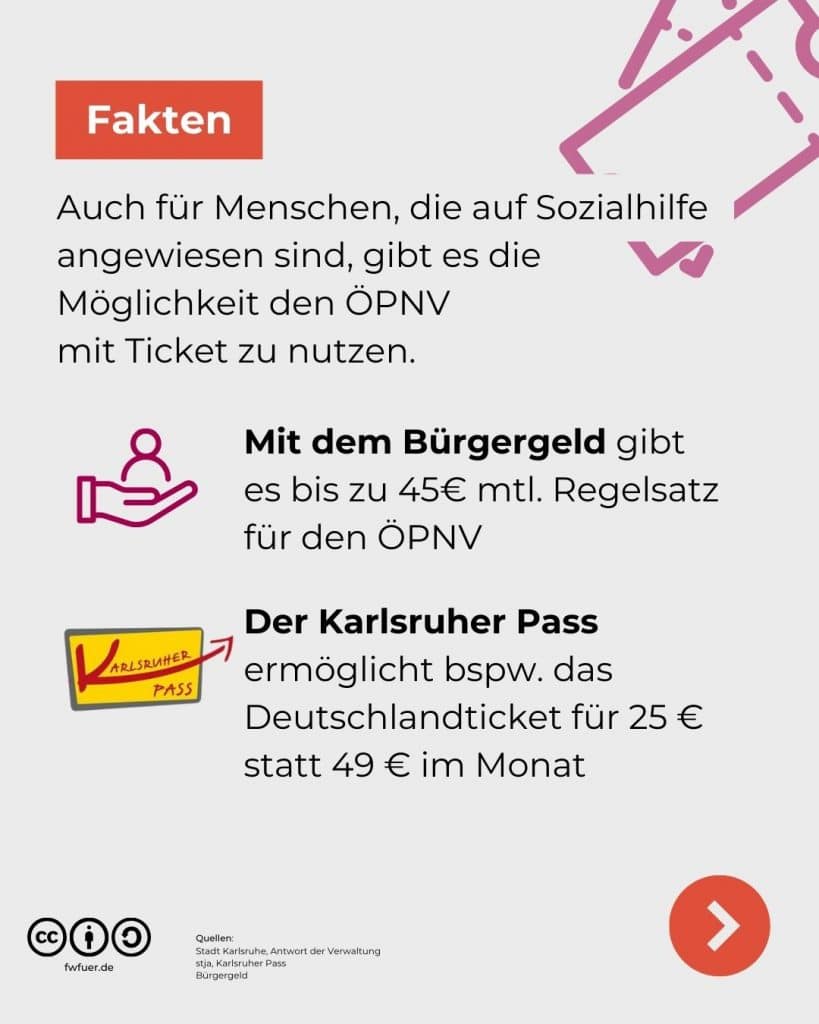
The argument of the Left, SPD and Greens, who had spoken out in favor of not filing criminal charges, that these were mostly cases of poverty, did not hold water. “The citizen’s allowance provides a lump sum for public transport and there are additional benefits for people on low incomes,” said social politician and parliamentary group leader Friedemann Kalmbach (FÜR Karlsruhe). “The Karlsruhe Pass is an example of this.”
The city council group “Freie Wähler” and the voter group “FÜR Karlsruhe” are calling on the Supervisory Board of the Karlsruhe Transport Authority (VBK) to oppose the municipal council’s decision and not to implement the demand.
“It is a question of fairness and supporting local public transport, which is already underfunded,” said Kalmbach, who is a member of the KVV Supervisory Board.
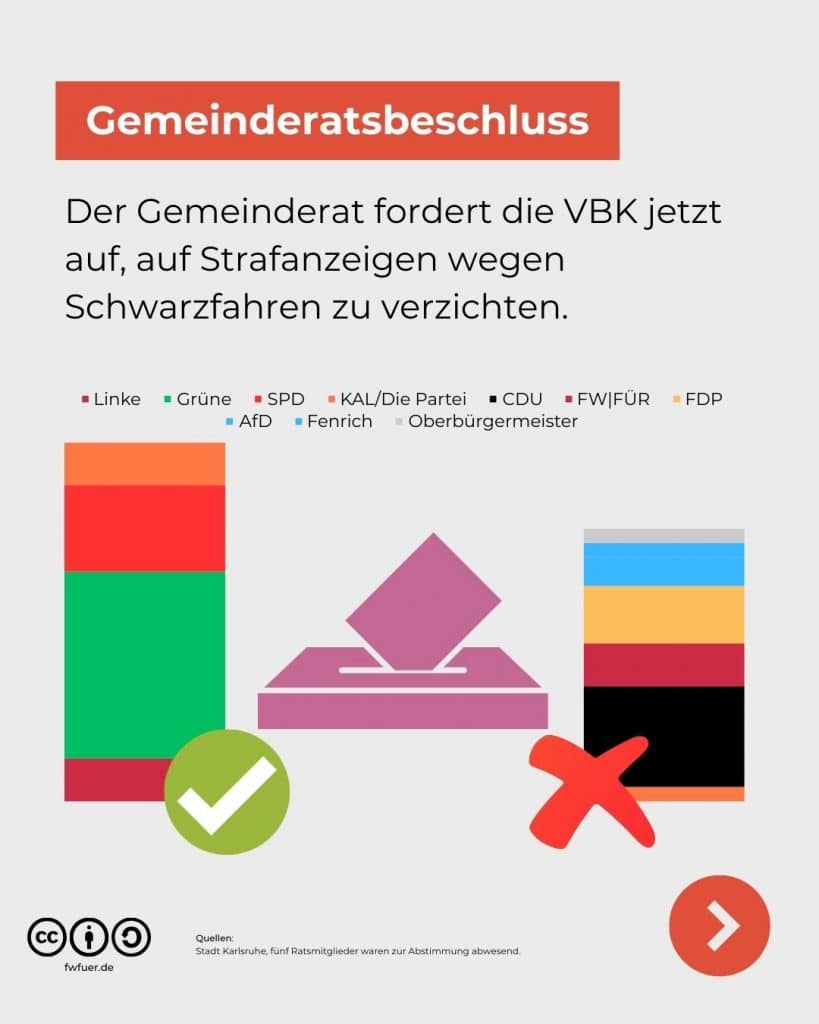
On February 20, 2024, the Karlsruhe City Council decided that the VBK should no longer press charges for repeated fare evasion. The decision was made with the votes of the Left, SPD and Greens, as well as KAL/Die Partei against the votes of the CDU, FDP and the city council group Freie Wähler and FÜR Karlsruhe. Lord Mayor Dr. Frank Mentrup (SPD) also expressed his shock at his group’s support for the idea. Lüppo Cramer (KAL), however, did not agree with his group’s vote. The city council group of the Free Voters and the voters’ group “FÜR Karlsruhe” had spoken out against the decision not to press charges in the run-up to the vote.
Background
Fare dodging in Karlsruhe: a problem with consequences
Every year, the Karlsruhe public transport company (VBK) loses several million euros due to fare evasion. A nationwide loss of up to a quarter of a billion euros is added to this.
Fare evasion, as it is known, is punishable under Section 265a of the German Criminal Code (StGB). If you are caught three times within three years, you not only have to pay an increased fare of €60, but also risk being reported to the police.
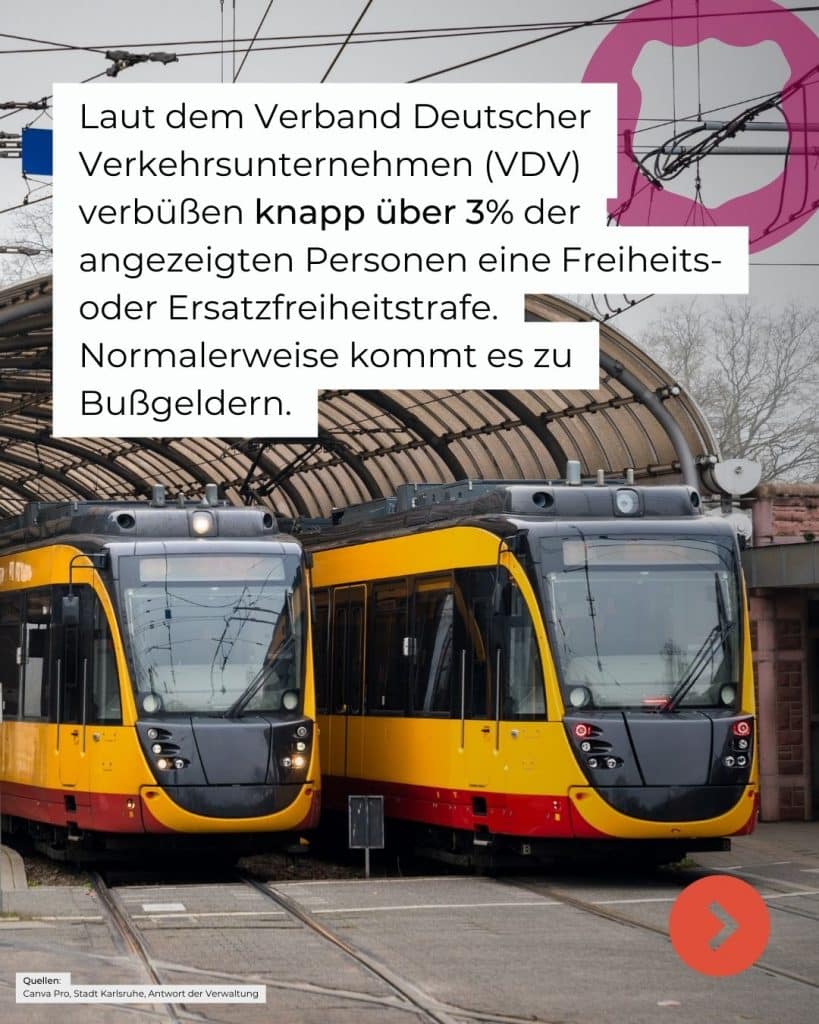
The penalties then range from fines to custodial sentences. In practice, however, custodial sentences are rare: Nationwide, they were the case in only 3% of all charges.
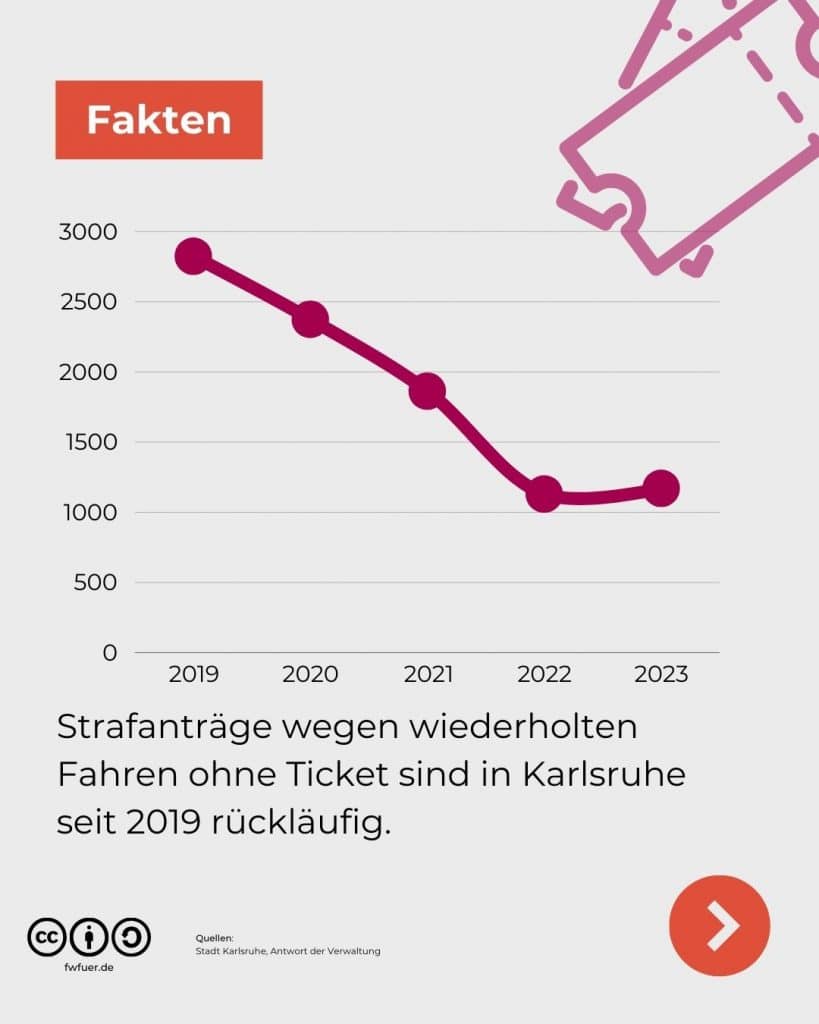
Between 2019 and 2023, 9,363 criminal charges were filed with the VBK for fraudulent evasion of services. VBK supports the position of the Association of German Transport Companies (VDV) that driving without a valid ticket should continue to be punished as a criminal offense within the meaning of Section 265a StGB. This also allows the police to be called in, for example to establish personal details.
Fare evasion has a negative impact on public transport: it leads to a loss of revenue, which is not used to finance the quality and expansion of public transport.
The consistent punishment of fare evasion is therefore necessary to ensure the safety of passengers, to maintain fairness towards paying customers and to strengthen public transport.
